
80% Less Inquiry Workload: How Fujimak Unified 218 Engineers Across 70 Locations with AI Search
Fujimak Corporation
Manufacturing501-1,000 employeesInternal Helpdesk

At a glance
- Inquiry handling workload reduced 80%
- Access volume increased 5x from launch
- 370 pages of PDF manuals made searchable
- 102 articles added in first year
The Challenge
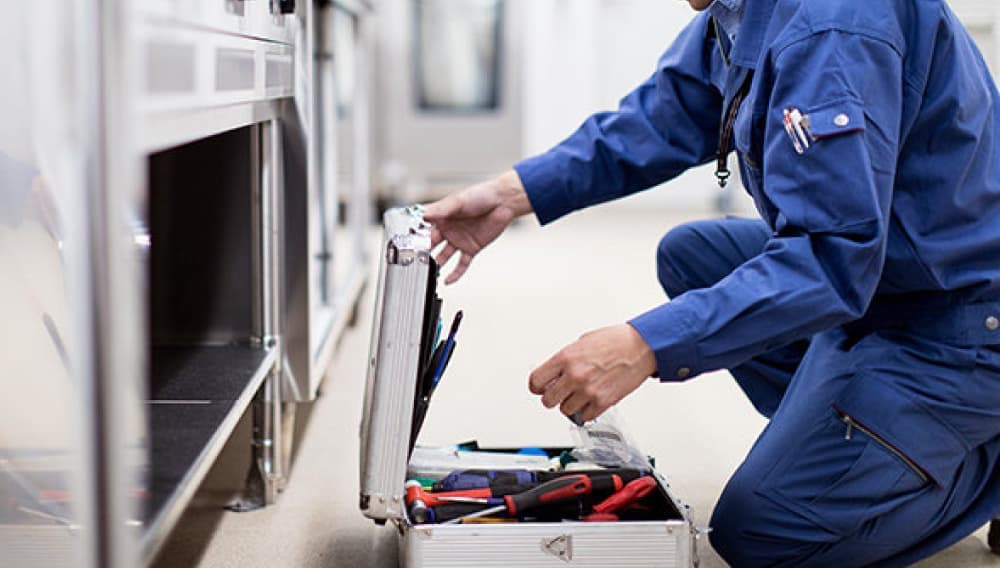
Fujimak Corporation manufactures commercial kitchen equipment for hotels, restaurants, and hospitals, where kitchens must never stop. Their 218 service engineers, spread across roughly 70 locations nationwide, operate 365 days a year on rotating shifts.
For years, specialized knowledge lived in the heads of a few product experts. When service engineers in the field encountered a question about Combi Ovens or Vario products, everyone called Keita Aikawa in the East Japan Purchasing Group. When he was in a meeting, on a day off, or simply overwhelmed, engineers were stuck. Customers waited. Sales opportunities slipped away.
Aikawa felt the weight of being a bottleneck. On working days, constant calls interrupted his concentration and pushed his own work aside. On days off, he knew colleagues in the field couldn't get answers they needed.
Knowledge sharing relied on multi-hundred-page PDF manuals and email announcements, both easily missed or impossible to search efficiently. Remote single-engineer offices had no nearby colleagues to consult. The knowledge gap between urban and regional locations widened.
The company had a large product lineup with frequent spec updates. Busy engineers, especially those less comfortable with IT, struggled to keep up. Previous system implementations had gone unused. The team needed a solution that would actually be adopted, and that could reproduce the skill Aikawa had developed over years: inferring what an engineer was really asking from a vague description.
Why Helpfeel
The team initially explored a chatbot, but Fujimak's president challenged them: "Isn't there something more cutting-edge? Have you thought through the operational burden?" That sent them back to evaluate from scratch.
Two factors made Helpfeel the answer. First, its intent-prediction search could replicate what the team called "Aikawa-style intent prediction search," the craftsman's skill of interpreting varied expressions and guiding engineers to the right information. Second, Helpfeel's accompaniment-style Customer Success support structure addressed past failures. The company had experienced multiple system rollouts that staff never used. This time, they wanted professional expertise to ensure adoption happened reliably.
What They Did
- Launched with PDF Search to make 370 pages of existing product manuals instantly searchable, then prioritized frequently asked historical questions and rare critical-emergency edge cases not covered in the manuals for article creation.
- After launch, the Customer Success team delivered monthly improvement proposals based on usage data. Aikawa added articles in real time: when responding to an inquiry, he searched Helpfeel first, and if an article didn't exist, he created it on the spot. This approach yielded 102 new articles in the first year.
- Built adoption habits by promoting Helpfeel in department meetings, briefing sessions, and in-person training. The team leveraged digitally-native younger employees as early adopters, then shared their use cases to bring senior staff on board. Aikawa quietly promoted usage by advising engineers on search keywords during inquiries or including article links in email replies.
- Measured success by tracking access volume, with a target of exceeding the number of traditional phone and email inquiries, proving more engineers were finding answers independently.
- Maintained momentum through monthly Customer Success review meetings that created a productive cycle: data-driven proposals from the CS team, tasks completed before the next meeting. The team credited this external support for preventing Helpfeel from becoming another unused system.
Results
Monthly access volume climbed steadily from approximately 200 at launch to 1,000 currently, a more than 5x increase. The growing number of engineers independently resolving questions through Helpfeel became clearly evident.
For service engineers in the field, "just search Helpfeel first" became habitual. Kenya Karita, a service engineer in Tokyo, now searches Helpfeel in advance and prints relevant sections to bring to customer sites. For critical issues that could shut down equipment completely, preparing thoroughly via Helpfeel before the visit means even unexpected events can be handled calmly.
In one recent example, a product had a parts change and Karita didn't know how to wire it correctly during a job. He inquired with the responsible department and was told "it's posted on Helpfeel." He found an article with diagrams, far easier to understand than a verbal explanation over the phone.
For Aikawa, the efficiency improvement was dramatic. Previously, answering a repeated question meant searching through email history to compose a response. Now he often pastes a link to the relevant Helpfeel article and replies immediately. His inquiry handling burden dropped approximately 80%.
The benefits extended beyond individual efficiency. Knowledge silos began to dissolve, and the gap between urban and regional engineers started to close. Freeing up Aikawa's time from constant inquiry calls gave him capacity to focus on product development and improvement work.
Looking Ahead
Service engineers submitted survey feedback requesting coverage of more products. In response, Fujimak extended Helpfeel to products from Fujimak Neo, a group company handling development and manufacturing. Using Helpfeel Analytics, the team generated 200 articles from 1,000 inquiry logs, making the expansion efficient. The plan is to continue adding supported products so more engineers can respond smoothly in the field.
The Service Promotion Department's goal is to eliminate knowledge silos entirely and equalize service engineer knowledge levels, so any engineer visiting a site can resolve malfunctions quickly. From a company-wide perspective, reducing the inquiry burden on product specialists frees their time for development work, contributing to business growth along two axes: improving service quality and strengthening development capability.
As Fujimak expands internationally, Helpfeel addresses a critical challenge: overseas service engineers encountering questions in the field often can't get immediate answers from Japan due to time zone differences. With Helpfeel available, they can access the information they need regardless of time or location. As the company grows its overseas sales footprint, Helpfeel will be a powerful enabler.
“The confidence that comes from being well-prepared beforehand has become a major source of support.”
— Kenya Karita, Service Engineer, Tokyo Sales Division 2